
Show results for
Deals
- 4K Ultra HD Sale
- Action Sale
- Alternative Rock Sale
- Anime sale
- Award Winners Sale
- Blu ray Sale
- British Music Sale
- British Sale
- Classical Music Sale
- Comedy Sale
- Country Sale
- Criterion Sale
- Cult Films sale
- Drama Sale
- Electronic Music sale
- Horror Sci fi Sale
- Jazz Sale
- Metal Sale
- Music Video Sale
- Musicals on Sale
- Mystery Sale
- Naxos Label Sale
- Rap and Hip Hop Sale
- Reggae Sale
- Rock
- Rock and Pop Sale
- Rock Legends
- Soul Music Sale
- TV Sale
- Vinyl on Sale
- War Films and Westerns on Sale

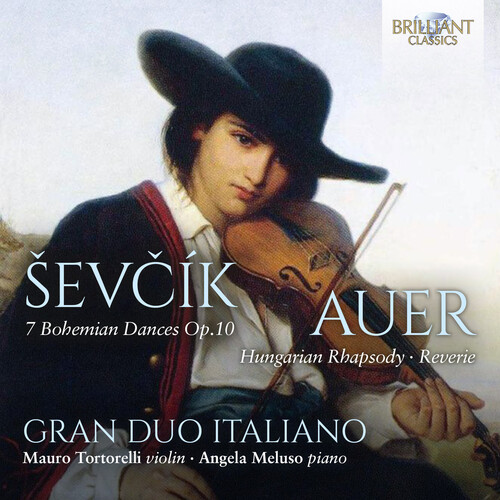
7 Bohemian Dances 10
- Format: CD
- Release Date: 7/23/2021
7 Bohemian Dances 10
- Format: CD
- Release Date: 7/23/2021
- Composers: Auer Sevcík
- Label: Brilliant Classics
- UPC: 5028421962139
- Item #: 2409964X
- Genre: Classical
- Release Date: 7/23/2021

Product Notes
With this recording the Gran Duo Italiano showcases one of the pillars of modern violin performance that receives little if any attention today: the great composer-teacher-violinists active at the turn of the 20th century and the violin 'schools' that emanated from their exemplary violin techniques and interpretive practice. Such musicians, even before establishing themselves as master teachers, were both talented solo performers and members of leading chamber ensembles. Two violinists from this period who stand above the rest are Leopold Auer (1845-1930) and Otakar Sevciìk (1852-1934). This project investigates and rediscovers concert compositions written by these virtuosos. The common thread in their writing is a vibrant romanticism, dominated, of course, by their own instrument, the violin. The form and harmony pursued in these compositions sought to highlight the violin's bel canto attributes and draw on the performer's full range of technical skills. Auer's limited oeuvre reveals an impressive talent for composition. His Rhapsodie hongroise Op.5 was dedicated to Pablo de Sarasate, and it's relatively free structure affords soloists the opportunity to display their full technical prowess with both the left hand and the bow in writing clearly inspired by Paganini featuring flying picchettati, rapid demisemiquaver flourishes, G string passages, chromatic scales in thirds, and harmonics. His Reverie Op.3 in G is couched in intense lyricism, as is the extremely refined Reverie No.2 in E flat. His Tarantelle de concert Op.2, in which double-stopped thirds play a starring role, is bright and virtuosic in both the first and final sections, with a contrasting romantic, expressive central part.
