
Show results for
Deals
- 4K Ultra HD Sale
- Action Sale
- Alternative Rock Sale
- Anime sale
- Award Winners Sale
- Blu ray Sale
- British Music Sale
- British Sale
- Classical Music Sale
- Comedy Sale
- Country Sale
- Criterion Sale
- Cult Films sale
- Drama Sale
- Electronic Music sale
- Horror Sci fi Sale
- Jazz Sale
- Metal Sale
- Music Video Sale
- Musicals on Sale
- Mystery Sale
- Naxos Label Sale
- Rap and Hip Hop Sale
- Reggae Sale
- Rock
- Rock and Pop Sale
- Rock Legends
- Soul Music Sale
- TV Sale
- Vinyl on Sale
- War Films and Westerns on Sale

Brahms: Ungarische Tanze
- Format: CD
- Release Date: 5/2/2025
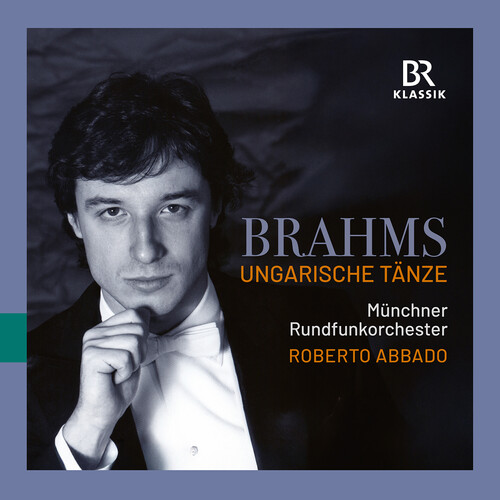
Brahms: Ungarische Tanze
- Format: CD
- Release Date: 5/2/2025
- Composers: Johannes Brahms
- Label: BR Klassiks
- UPC: 4035719003604
- Item #: 2703175X
- Genre: Classical Artists
- Release Date: 5/2/2025

Product Notes
JOHANNES BRAHMS - HUNGARIAN DANCES: Before the publication of his Hungarian Dances in their original version for piano four hands, Johannes Brahms was hardly known to the educated middle classes, but the works ensured that the composer became a household name. In their subsequent orchestral versions, the Dances entered the repertoire of prestigious concert orchestras and, after music had become technically reproducible, went on to become even more massively popular. On this CD, BR-KLASSIK presents Brahms' 21 Hungarian Dances in their orchestral versions, in a studio production with the Munich Radio Orchestra under it's former chief conductor Roberto Abbado. Johannes Brahms had become acquainted with Hungarian melodies and scales through the Hungarian violinist Eduard Remenyi, with whom he had undertaken his first concert tour in 1853. His Hungarian Dances for piano four hands were composed from around 1858 onwards; the first ten were published in 1869, the others in 1880. In 1872, Brahms presented a version of the first ten dances for solo piano and in 1873 he orchestrated Dances Nos. 1, 3 and 10, premiering them in Leipzig on February 5, 1874. In his Hungarian Dances, Brahms skilfully combined various Hungarian folk song melodies with his own. The fact that the originals were, and remain, unknown to most listeners is probably what makes the compositions so appealing. His Hungarian Dances were extremely popular right from the start, and are still among his best-known works today. None other than Antonin Dvorak was responsible for the orchestrations of other dances, and popular orchestral versions were also produced by Albert Parlow, Andreas Hallen, Martin Schmeling, Paul Juon and Hans Gal.
