
Show results for
Deals
- 4K Ultra HD Sale
- Action Sale
- Alternative Rock Sale
- Anime sale
- Award Winners Sale
- Blu ray Sale
- British Music Sale
- British Sale
- Classical Music Sale
- Comedy Sale
- Country Sale
- Criterion Sale
- Cult Films sale
- Drama Sale
- Electronic Music sale
- Horror Sci fi Sale
- Jazz Sale
- Metal Sale
- Music Video Sale
- Musicals on Sale
- Mystery Sale
- Naxos Label Sale
- Rap and Hip Hop Sale
- Reggae Sale
- Rock
- Rock and Pop Sale
- Rock Legends
- Soul Music Sale
- TV Sale
- Vinyl on Sale
- War Films and Westerns on Sale

Chamber Music
- Format: CD
- Release Date: 3/6/2020
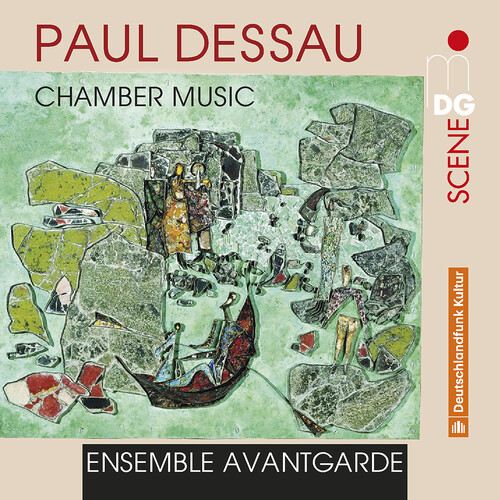
Chamber Music
- Format: CD
- Release Date: 3/6/2020
- Label: MDG
- UPC: 760623215822
- Item #: 2268993X
- Genre: Classical
- Release Date: 3/6/2020
- This product is a special order

Product Notes
Paul Dessau composed more than 450 works from all the genres, but scarcely a single one of them continues to meet with recognition and representation in today's concert world. The go-getters of the Ensemble Avantgarde put an end to this unfortunate state of affairs with an impressive overview of the chamber oeuvre of this composer whose vicissitudinous career vividly reflects the dramatic upheavals and achievements of the twentieth century. The young Dessau celebrated great successes with his Concertino in the unusual instrumentation for solo violin with flute, clarinet, and horn already in 1925 and even won a composition prize for it. Dessau himself actually wanted to become a violinist, and Gewandhaus concertmaster Andreas Seidel masters with bravura what at times is a wildly virtuosic solo part. The young composer's very own combination of the linear style of a Hindemith and the expressive and complex harmony of the early Schönberg is the hallmark of his individual musical language. Dessau first discovered his Jewish roots during his forced exile in the 1930s. It was during this time that he also began to regard himself as a "political composer." The Jewish Dances and Guernica after Picasso's famous painting both resulted from this development, and in the Suite for Saxophone and Piano his excited emotional state after his uprooting has also left behind clear traces in what is quite literally a breathless compositional texture. When Dessau returned to Germany's supposed better half in the East after World War II, he repeatedly got caught in the bind between political conformity and artistic freedom. He increasingly turned to the performance of music with children; the "Variations" and "Grasmückenstücke für Mücke Gras" are particularly fine examples of just how attractive good music with educational goals can be.
