
Show results for
Deals
- 4K Ultra HD Sale
- Action Sale
- Alternative Rock Sale
- Anime sale
- Award Winners Sale
- Blu ray Sale
- British Music Sale
- British Sale
- Classical Music Sale
- Comedy Sale
- Country Sale
- Criterion Sale
- Cult Films sale
- Drama Sale
- Electronic Music sale
- Horror Sci fi Sale
- Jazz Sale
- Metal Sale
- Music Video Sale
- Musicals on Sale
- Mystery Sale
- Naxos Label Sale
- Rap and Hip Hop Sale
- Reggae Sale
- Rock
- Rock and Pop Sale
- Rock Legends
- Soul Music Sale
- TV Sale
- Vinyl on Sale
- War Films and Westerns on Sale

Orbus Ille Germanus - L'art du luth allemand au XVe siecle
- Format: CD
- Release Date: 9/4/2026
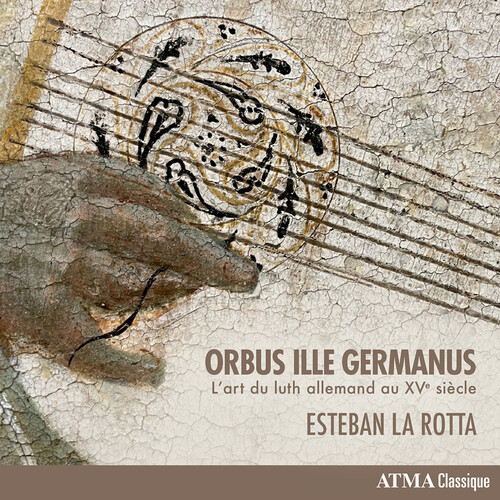
Orbus Ille Germanus - L'art du luth allemand au XVe siecle
- Format: CD
- Release Date: 9/4/2026
- Composers: Anonymous, Conrad Paumann, Crawford Young, Esteban La Rotta
- Label: Atma Classique
- UPC: 722056291125
- Item #: 2828963X
- Genre: Classical Artists
- Release Date: 9/4/2026
CD
Price: $15.19

Get it between
Thu. Sep 24 - Fri. Oct 9
Deliver to
Product Notes
With Orbus ille Germanus: The Art of the German Lute in the 15th Century, lutenist Esteban La Rotta explores the emergence of polyphonic lute playing in the late Middle Ages. Inspired by a famous description by the theorist Johannes Tinctoris of a mysterious ' blind German,' this album delves into an instrumental tradition in which certain musicians were able to produce multiple voices simultaneously on the lute. This moment marks a decisive turning point in the instrument's history, as it transitions from a primarily melodic role to a rich and expressive polyphonic language.
Based on major 15th-century sources such as the Buxheimer Orgelbuch, the Lochamer Liederbuch, and the Wolfenbuttel tablature fragments, Esteban La Rotta offers a vibrant reinterpretation of this repertoire. Some pieces are adapted for the lute from keyboard works, while others take the form of intabulations or new arrangements based on historical tenor lines. Through this approach, which is both musicological and creative, the album seeks to convey what the sound of the German lute might have been like at the end of the 15th century.