
Show results for
Deals
- 4K Ultra HD Sale
- Action Sale
- Alternative Rock Sale
- Anime sale
- Award Winners Sale
- Bear Family Sale
- Blu ray Sale
- British Music Sale
- British Sale
- Classical Music Sale
- Comedy Sale
- Country Sale
- Criterion Sale
- Cult Films sale
- Drama Sale
- Electronic Music sale
- Horror Sci fi Sale
- Jazz Sale
- Metal Sale
- Music Video Sale
- Musicals on Sale
- Mystery Sale
- Naxos Label Sale
- Rap and Hip Hop Sale
- Reggae Sale
- Rock
- Rock and Pop Sale
- Rock Legends
- Soul Music Sale
- TV Sale
- Vinyl on Sale
- War Films and Westerns on Sale

Organ Landscapes: Luneburg
- Format: CD
- Release Date: 6/5/2026
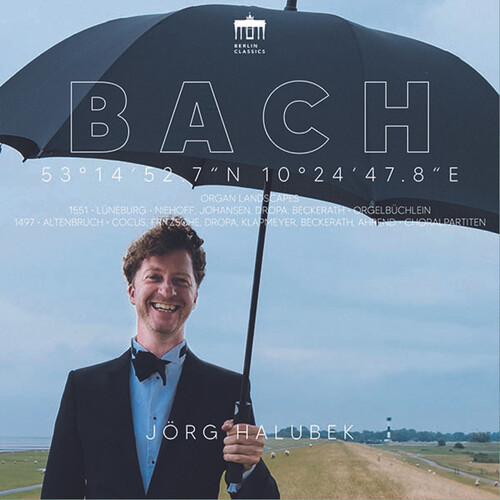
Organ Landscapes: Luneburg
- Format: CD
- Release Date: 6/5/2026
- Composers: Johann Sebastian Bach
- Label: Berlin Classics
- Number of Discs: 2
- UPC: 885470020853
- Item #: 2745705X
- Genre: Classical Artists
- Release Date: 6/5/2026
CD
Price: $28.49

Get it between
Thu. Oct 15 - Fri. Oct 30
Deliver to
Product Notes
At the age of 15, Johann Sebastian Bach attended the Latin school at St. Michael's Monastery in Luneburg for two years. There is also evidence of at least one trip to Hamburg during this time. The young Bach must have been impressed and inspired by the North German music scene with it's large organs and independent pedals, the diverse reed stops, the clear and "sharp" mixtures and, last but not least, his musical experiences in Hamburg's Gansemarkt Opera House.
Bach's chorale partitas bear clear traces of the North German environment, for example in the operatic-ariose elaborations with French ornaments or in the very individual virtuoso arrangements of the variations, which suggest the text interpretations of individual song verses. In contrast to this is the Orgelbuchlein, composed in the somewhat later Weimar years, which forms the foundation for Bach's monothematic composition: Here, the sound of a chorale is formed using just one characteristic motif. The roots of this compositional aesthetic can be traced back to Bach's early encounter with Georg Bohm in Luneburg. The history of the large organ in St. Michael's, which can be traced back to the 15th century, is eventful: in 1708 the Schnitger pupil Matthias Dropa built a new organ and extended the existing instrument by Niehoff (1553) - the young Bach may have been able to follow the plans. After numerous alterations, the current specification corresponds to that of 1708, and a precise historical restoration is currently being planned. The tremendous richness of color and the tonal spirit of the Baroque period can be clearly heard despite the equal temperament. The Klapmeyer organ in Altenbruch (1730), on which Dropa also worked from 1697-1700, gives an authentic impression of the sound of this organ landscape in Luneburg thanks to the restoration by Jurgen Ahrend (2004). The specifics of the historical sounds become tangible when comparing the two instruments.