
Show results for
Deals
- 4K Ultra HD Sale
- Action Sale
- Alternative Rock Sale
- Anime sale
- Award Winners Sale
- Blu ray Sale
- British Music Sale
- British Sale
- Classical Music Sale
- Comedy Sale
- Country Sale
- Criterion Sale
- Cult Films sale
- Drama Sale
- Electronic Music sale
- Horror Sci fi Sale
- Jazz Sale
- Metal Sale
- Music Video Sale
- Musicals on Sale
- Mystery Sale
- Naxos Label Sale
- Rap and Hip Hop Sale
- Reggae Sale
- Rock
- Rock and Pop Sale
- Rock Legends
- Soul Music Sale
- TV Sale
- Vinyl on Sale
- War Films and Westerns on Sale

Roman
- Format: CD
- Release Date: 5/3/2024
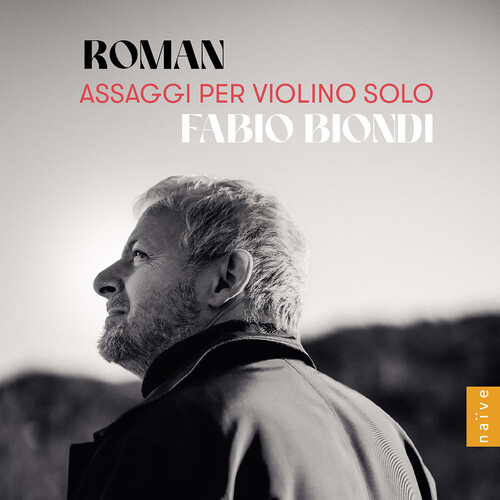
Roman
- Format: CD
- Release Date: 5/3/2024
- Composers: Johan Helmich Roman
- Label: Naive
- UPC: 3700187682095
- Item #: 2635562X
- Genre: Classical
- Release Date: 5/3/2024

Product Notes
Through this exciting recording, the violinist Fabio Biondi pursues his exploration of the seventeenth- and eighteenth-century repertoire for solo violin. Two years after his complete recording of Johann Sebastian Bach's solo Sonatas and Partitas (V 5467), he lands on entirely unknown territory, the Assaggi by the Swedish composer Johan Helmich Roman (1694-1758). In his own time, Roman was an important figure in the violin world. His career led him to the four corners of Europe, affording him the opportunity to meet many crucially important figures on the German and more southern musical stages, composers as well as renowned performers, especially when he was in Italy, where he visited Tartini. He also played with Handel. All of these encounters had a long-term influence on Johan Helmich Roman's style, a different and important take on les goûts réunis. If the highly polyphonic structures of the Assaggi naturally remind us of the Swede's Saxon origins (BeRI 314), if their study-like nature willingly brings to mind the twenty-four Fantasias of Telemann, works as much intended for professional musicians as for accomplished amateurs (the last movement of BeRI 310), the harmonies, which like the melodic outlines in Roman's work are subtly tinged with an Italianate flavour, clearly recall contrasting works by Tartini (the second part of BeRI 320 for instance, or again the Andante of BeRI 324).
