
Show results for
Deals
- 4K Ultra HD Sale
- Action Sale
- Alternative Rock Sale
- Anime sale
- Award Winners Sale
- Blu ray Sale
- British Music Sale
- British Sale
- Classical Music Sale
- Comedy Sale
- Country Sale
- Criterion Sale
- Cult Films sale
- Drama Sale
- Electronic Music sale
- Horror Sci fi Sale
- Jazz Sale
- Metal Sale
- Music Video Sale
- Musicals on Sale
- Mystery Sale
- Naxos Label Sale
- Rap and Hip Hop Sale
- Reggae Sale
- Rock
- Rock and Pop Sale
- Rock Legends
- Soul Music Sale
- TV Sale
- Vinyl on Sale
- War Films and Westerns on Sale

Tierkreis
- Format: CD
- Release Date: 8/9/2011
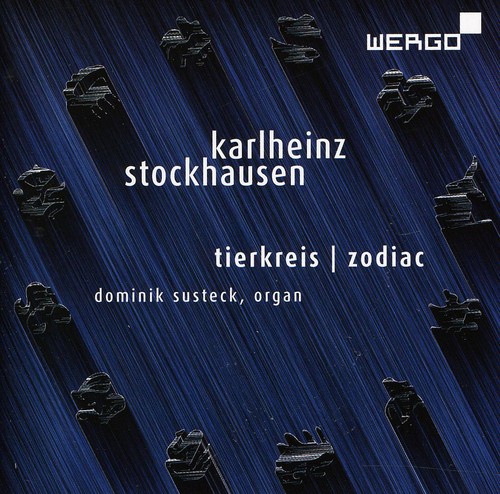
Tierkreis
- Format: CD
- Release Date: 8/9/2011
- Composers: Karlheinz Stockhausen
- Performers: Dominik Susteck
- Label: Wergo Germany
- UPC: 4010228673623
- Item #: WER286736
- Genre: Classical
- Release Date: 8/9/2011

Product Notes
First CD recording of Karlheinz Stockhausen's "Tierkreis" ("Zodiac") in the version for organ released by WERGO: Originally composed for music boxes, the work has been arranged for organ and recorded by the young organist Dominik Susteck at St. Peter in Cologne. The thirty-three-year-old, who has been organist at St. Peter for four years, realized this project not only at an unusual venue but also on an unusual instrument. Since the 1980s, this Catholic chappel combines the church with contemporary art: The "St. Peter's Art Station" has become not only a much sought-after venue for exhibitions of contemporary art but also a special venue for new music due to numerous concerts and services with 20th- and 21st-century music. In addition, the "St. Peter's Art Station" is provided with an instrument built by Willy Peter which was designed for contemporary music: The four-manual great organ and the three-manual choir organ currently have 104 stops, including such unusual sound additions as siren, saxophone, and percussion orchestra with cymbals, drums, or xylophone. The organ, inaugurated in 2004, is worldwide unique because of it's design and structure. Dominik Susteck describes his interpretation of Stockhausen's work as "frozen musical movement. The instrument no longer sounds like an organ but proves to be a colourful, agile and dynamic being".
