
Show results for
Deals
- 4K Ultra HD Sale
- Action Sale
- Alternative Rock Sale
- Anime sale
- Award Winners Sale
- Bear Family Sale
- Blu ray Sale
- British Music Sale
- British Sale
- Classical Music Sale
- Comedy Sale
- Country Sale
- Criterion Sale
- Cult Films sale
- Drama Sale
- Electronic Music sale
- Horror Sci fi Sale
- Jazz Sale
- Metal Sale
- Music Video Sale
- Musicals on Sale
- Mystery Sale
- Naxos Label Sale
- Rap and Hip Hop Sale
- Reggae Sale
- Rock
- Rock and Pop Sale
- Rock Legends
- Soul Music Sale
- TV Sale
- Vinyl on Sale
- War Films and Westerns on Sale

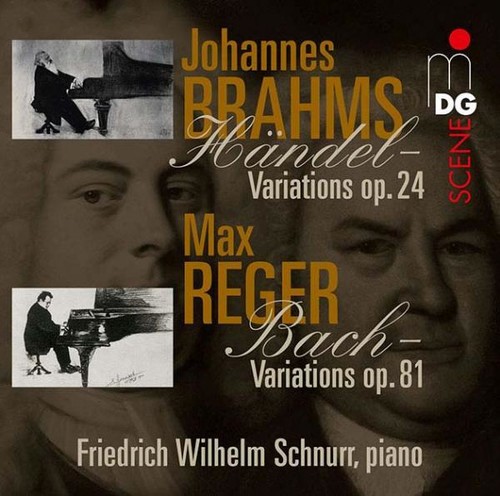
Variations & Fugues on Themes By Handel & Bach
- Format: CD
- Release Date: 5/26/2015
Variations & Fugues on Themes By Handel & Bach
- Format: CD
- Release Date: 5/26/2015
- Label: MDG
- UPC: 760623017228
- Item #: 1490659X
- Genre: Classical
- Release Date: 5/26/2015
CD
Price: $19.94

Get it between
Fri. Oct 9 - Sat. Oct 24
Deliver to
Product Notes
Brahms, Johannes: Variations and Fugue on a theme by Handel op. 24 Reger, Max: Variations and Fugue on a theme by J.S. Bach op. 81
A multigenerational project of a special kind: Friedrich Wilhelm Schnurr goes back far enough to have studied with the piano legends Alfred Cortot and Wilhelm Kempff. As a dedicated teacher of world rank, he himself has continued to leave his mark on generations of pianists through to the present. Many of his outstanding pupils have gone on to occupy prestigious professorships throughout the world. MDG is now rereleasing a recording from the 1980s showing us Schnurr as an energetic, gripping interpreter. Variations on themes by Handel and Bach form his musical topic: Johannes Brahms and Max Reger also knew what sort of predecessors they had! Handel himself based a variation movement on his dancy and simple theme. What the young Brahms did with it, however, is sensational. Although he adheres very closely to the original in formal matters, a gigantic cosmos of musical characters and expressive levels unfolds. It is fascinating how Schnurr develops this most highly compressed and concentrated music through to the mighty concluding fugue. Max Reger chose an instrumental prelude from a Bach cantata as the pretext for his variation cycle. Unlike Brahms, however, after a few paraphrases he strayed far from his point of departure. Already the third variation is a very free, contemplative fantasy surprising us with it's sudden dynamic outbursts. Reger too concludes with an extraordinary fugue. Already the initial subject is brimming with chromaticism, and when the second subject enters later on, the result is a double fugue of colossal dimensions.