
Show results for
Deals
- 4K Ultra HD Sale
- Action Sale
- Alternative Rock Sale
- Anime sale
- Award Winners Sale
- Bear Family Sale
- Blu ray Sale
- British Music Sale
- British Sale
- Classical Music Sale
- Comedy Sale
- Country Sale
- Criterion Sale
- Cult Films sale
- Drama Sale
- Electronic Music sale
- Horror Sci fi Sale
- Jazz Sale
- Metal Sale
- Music Video Sale
- Musicals on Sale
- Mystery Sale
- Naxos Label Sale
- Rap and Hip Hop Sale
- Reggae Sale
- Rock
- Rock and Pop Sale
- Rock Legends
- Soul Music Sale
- TV Sale
- Vinyl on Sale
- War Films and Westerns on Sale

Works for Violin & Piano
- (Hybrid SACD)
- Format: SACD
- Release Date: 1/7/2022
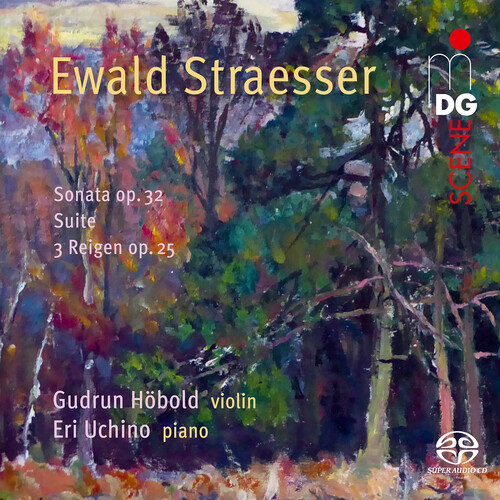
Works for Violin & Piano
- (Hybrid SACD)
- Format: SACD
- Release Date: 1/7/2022
- Composers: Ewald Straesser
- Label: MDG
- UPC: 760623222868
- Item #: 2459491X
- Genre: Classical Artists
- Release Date: 1/7/2022

Product Notes
Ewald Straesser's catalogue of works contains over 200 compositions, thirteen numbers for violin and piano alone. Gudrun Höbold and Eri Uchino have unearthed some astonishing pieces from the completely forgotten collection of this Rhinelander composer, who was seen by his contemporaries as a successor to Brahms. A violin sonata, a suite for violin alone and a series of character pieces leave only one question: Why only now? During his lifetime, Straesser was highly regarded as a composer; in the autumn of 1917, an entire Straesser Festival was even held in Cologne, at the opening of which his violin sonata was played. Much honor - the avant-garde, however, resented the adherence to the tonal, even though Sträßer went his own way harmonically. And Ewald Straesser was even ahead of his model Brahms in his great melodic inventiveness, which is particularly evident in his works for violin and piano. The "Ariosio" already bears the melodic element in it's title, and the other character pieces, here entitled "Drei Reigen" (Three Tales), also offer a particularly rewarding task for the violin. And one should not be deceived by the titles "Ländler - Spanish Dance - Mazurka": Straesser cannot and will not deny his optimistic Rhenish origins even on his journey through European styles... In general, it is the tender, sometimes even sentimental mood that is so enchanting about Straesser's music, along with the very broadly sweeping melodic arcs. It leads to fairytale-like episodes in the almost symphonic dimensions of the sonata. Gudrun Höbold and Eri Uchino dive deeply into this special world of sound, of which one would like to experience much more.
